Quality Control
—— Quality Control
Quality Control for Stable Belt Performance
We inspect the details that decide real belt performance: accurate dimensions, stable tensile strength, controlled elongation, reliable adhesion, and consistent batch quality.
From V belts to flat transmission belts, our quality control helps every order fit correctly, run smoothly, and reduce early failure risks.
We focus on the details that affect real use: correct fitting, stable tension, reliable bonding, and consistent quality across bulk orders.
Accurate Dimensions
We check belt width, thickness, height, length, and section consistency to help each belt fit properly with pulleys and transmission systems.
Stable Tensile Strength
Reinforcement cords and fabric layers are checked to reduce excessive stretching and support stable power transmission under working load.
Reliable Rubber Adhesion
We focus on the bonding between rubber and internal reinforcement layers to reduce delamination, cracking, and premature belt failure.
Consistent Bulk Orders
For bulk orders, we check specifications, appearance, labeling, and packing details to reduce mixed sizes, wrong markings, and batch inconsistency.
Quality Control for Stable Belt Performance
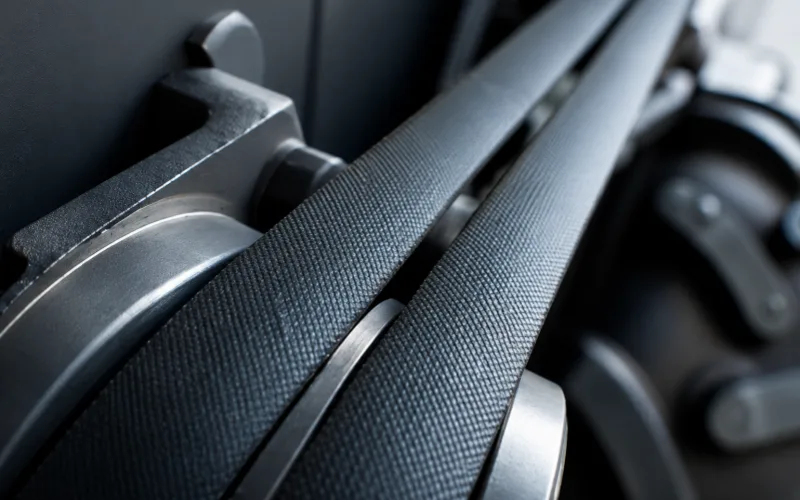
We control belt quality through batch-based testing and final product inspection.
Performance tests are made on same-batch samples or retained test pieces, while finished belts are checked for dimensions, surface finish, length consistency, markings, packaging, and order accuracy before shipment.
Batch-Based Tests
Same-batch samples or retained test pieces are tested to check load strength and control excessive stretching.
Cured rubber samples or accessible belt surfaces are checked to keep rubber softness and stiffness stable.
Retained samples are used to check bonding between rubber and reinforcement layers, helping reduce separation risks.
Final Product Inspection
Finished belts are measured for width, thickness, height, length, and section consistency.
We check cracks, bubbles, missing rubber, uneven wrapping, edge defects, and unclear markings before shipment.
Specifications, quantity, labels, packaging, and batch details are reviewed to reduce mixed-size or wrong-order risks.
"3C" Quality Responsibility in Production
Quality control works best when every step has a clear owner, a clear standard, and a clear decision point. Instead of relying only on end-stage checking, we use a structured QC workflow to keep production under control from the moment an order enters the factory.
Each production step follows internal operating requirements, and abnormal products are separated for review before they move forward. When a quality issue is found, the related process is checked, recorded, and corrected instead of simply passing the problem to the next stage.
Before production starts, order requirements are reviewed by the production and QC teams, so the workshop follows the same technical instructions from the beginning.
Key production steps are checked by responsible staff, with inspection duties clearly assigned instead of handled casually at the end.
Products with uncertain quality are held for review and are not allowed to continue through the normal production flow without confirmation.
When a problem appears, the related process is reviewed and recorded, helping the team reduce repeated mistakes in later production.
Goods are released only after the required QC steps are completed, so shipment is based on approval rather than assumption.
— Factory Equipment —
Equipment Supporting Quality Control
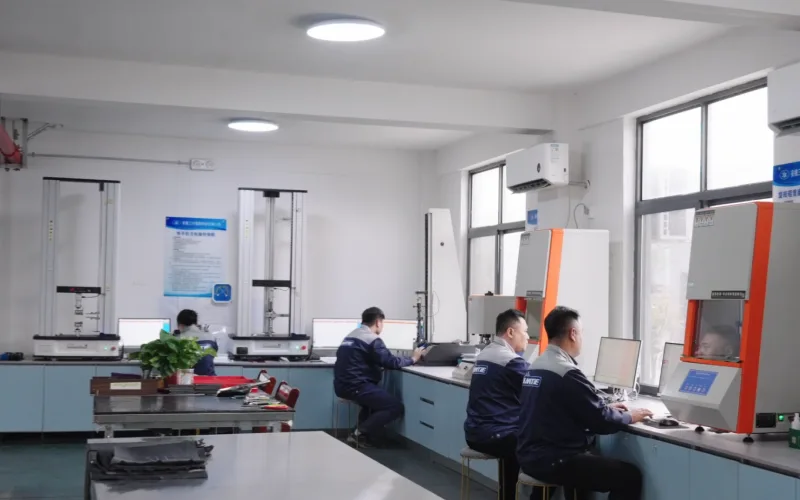
Belt quality depends on both process stability and sample verification. Some equipment supports rubber mixing and curing control, while testing machines help verify key performance results before shipment approval.
FAQs
Practical answers about order confirmation, third-party inspection, custom markings, and quality communication for transmission belt orders.
What should be confirmed before production starts?
Do you accept third-party inspection after production?
What do you confirm after custom marking is completed?
Can you review special quality requirements for bulk orders?
Can you customize product markings with our logo?
Can previous order feedback be used for repeat orders?
Start Your Transmission Belt Inquiry
Tell us your belt designation and quantity. Our team will provide you a practical quotation within 3 hours.